
 Business License

EPS vs XPS Insulation: How to Choose the Right Rigid Foam for Your Project
When the design team for a new logistics warehouse in Kuala Lumpur reviewed the original specification, the mechanical engineer flagged a problem. The architect had specified 100 mm EPS boards for the below-grade foundation walls. But the site sat on clay-heavy soil with a high water table, and the structural engineer had calculated that the soil load against the basement walls would exceed what standard EPS could handle without long-term deformation.
Swapping to XPS insulation boards solved both problems. The higher compressive strength of extruded polystyrene foam supported the structural load, and the closed-cell structure maintained thermal performance even when groundwater contacted the insulation.
At DaCheng BangMei, backed by Huaneng Zhongtian's 40 years of manufacturing expertise, we produce both XPS extruded polystyrene boards and supply EPS through our partner network. This guide delivers a complete EPS vs XPS insulation comparison so you can specify the right rigid foam material for foundations, roofs, walls, and specialty applications.
Want to compare XPS specifications for your project? Browse our XPS insulation board range for compressive strengths from 150 kPa to 700 kPa.
What Is EPS Insulation?
Expanded polystyrene insulation is manufactured by expanding polystyrene beads with steam and molding them into blocks, boards, or custom shapes. The beads fuse together but leave visible gaps between individual particles, creating a cellular structure with trapped air pockets.
Key Specifications of EPS Boards
| Property | Value |
|---|---|
| Density range | 10–35 kg/m³ |
| Thermal conductivity | 0.030–0.040 W/(m·K) |
| Compressive strength | 70–250 kPa (standard grades) |
| Water absorption | 2–6% by volume |
| Closed-cell content | ~90% |
| Maximum service temperature | 75°C |
EPS insulation's primary advantage is its low cost per unit of thermal resistance. Because manufacturing requires less energy and raw material than extruded alternatives, EPS boards typically cost 20–30% less than XPS boards of equivalent thickness. This makes EPS attractive for large-area above-grade applications where compressive loads are minimal, such as framed wall cavities and non-trafficable roof assemblies.
Common Applications for EPS
Exterior wall insulation: Lightweight boards install easily between framing members or as exterior continuous insulation
Non-trafficable roof insulation: Effective for flat roofs with pedestrian-restricted surfaces
Geofoam and fill: High-volume void fill applications where weight reduction matters
Packaging and cold chain: Molded shapes protect temperature-sensitive shipments
Insulated concrete forms: EPS blocks serve as permanent formwork and wall insulation
What Is XPS Insulation?
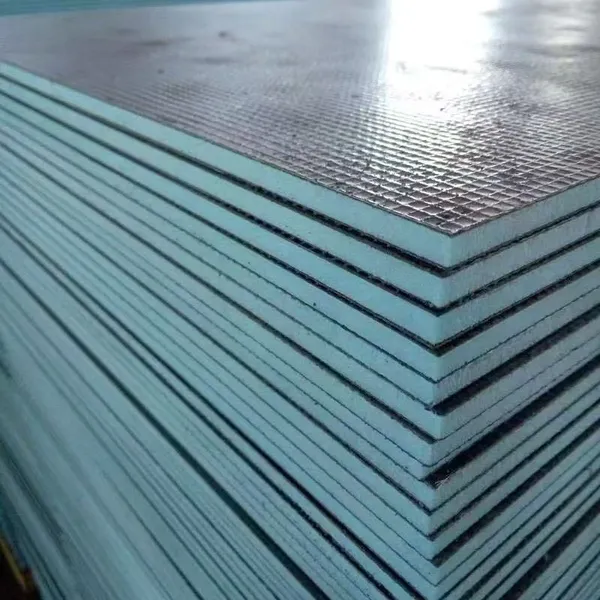
Extruded polystyrene insulation is produced through a continuous extrusion process where polystyrene resin and blowing agents are melted together under pressure and extruded through a die. The result is a homogeneous, closed-cell foam with a smooth surface and uniform cell structure.
Key Specifications of XPS Boards
| Property | Value |
|---|---|
| Density range | 25–45 kg/m³ |
| Thermal conductivity | 0.028–0.035 W/(m·K) |
| Compressive strength | 150–700 kPa (standard to high-load grades) |
| Water absorption | <1% by volume |
| Closed-cell content | >95% |
| Maximum service temperature | 75°C |
XPS insulation's primary advantage is its superior moisture resistance and compressive strength. The continuous closed-cell structure and smooth skin layer prevent water penetration far more effectively than EPS. This is why XPS is the material of choice for below-grade applications, inverted roofs, and any installation where long-term moisture exposure is likely.
Need XPS boards for a foundation or roof project? Our XPS extruded polystyrene boards are available in compressive strengths from 150 kPa to 700 kPa with custom dimensions and facing options.
Common Applications for XPS
Foundation and basement insulation: Resists groundwater absorption while supporting soil loads
Inverted roof insulation: Placed above the waterproofing membrane in protected membrane roof systems
Floor slab insulation: Supports concrete toppings and point loads under flooring systems
** Plaza deck and parking garage insulation**: Handles traffic loads and weather exposure
** Cold storage floors**: Maintains thermal performance in wet, low-temperature environments
Thermal Performance Comparison: EPS vs XPS Insulation
Both materials deliver excellent thermal insulation values, but the details matter for long-term performance in any EPS vs XPS insulation decision. This thermal insulation comparison focuses on the metrics that affect specification outcomes over decades, not just initial R-values. For a deeper understanding of how thermal conductivity and R-value metrics affect specification choices, refer to our technical guide.
R-Value Stability Over Time
XPS boards typically start with a higher R-value per inch (approximately R-5.0 per 25 mm) but can experience slight thermal drift as blowing agents diffuse out of the cells over the first few years. After stabilization, XPS generally maintains R-4.5 per 25 mm.
EPS boards offer approximately R-3.6 to R-4.2 per 25 mm depending on density. Because EPS uses air as the primary insulating medium, its thermal performance remains stable over time without significant drift.
Recommendation: For applications where initial high performance matters and 50-year thermal stability is required, XPS is typically preferred. For cost-sensitive above-grade applications where long-term R-value stability is less critical, EPS provides adequate performance at lower cost.
Thermal Conductivity at Different Temperatures
Both EPS and XPS experience reduced thermal conductivity (better performance) at lower mean temperatures. In cold storage and freezer floor applications, XPS's lower water absorption becomes even more important because moisture accumulation would degrade the already-critical thermal performance.
Moisture and Water Resistance
This is where the two materials diverge most significantly.
Water Absorption
XPS absorbs less than 1% water by volume even after extended submersion. The continuous manufacturing process creates a closed-cell structure with a dense skin on board surfaces that acts as an additional moisture barrier.
EPS absorbs 2–6% water by volume when submerged. The bead-boundary interfaces create microscopic pathways that allow water to penetrate more readily over time.
Real-World Impact
When David Chen, a project manager for a mixed-use development in Ho Chi Minh City, inspected the basement insulation after the first monsoon season, he found that the EPS boards installed below grade had absorbed enough moisture to reduce their effective R-value by approximately 15%. The XPS boards on the same project, installed on the opposite basement wing, showed no measurable moisture gain. The developer revised the specification for Phase 2 to XPS throughout the below-grade envelope.
Recommendation: For below-grade walls, foundations, inverted roofs, and any application with ground contact or standing water exposure, XPS is mandatory. For above-grade wall cavities and dry roof assemblies, EPS performs adequately.
Compressive Strength and Load-Bearing Capacity
Compressive Strength Ranges
| Grade | EPS (kPa) | XPS (kPa) |
|---|---|---|
| Standard | 70–100 | 150–250 |
| Medium | 100–150 | 250–400 |
| High | 150–250 | 400–700 |
XPS delivers consistently higher compressive strength across all density grades. The homogeneous extruded structure distributes loads evenly without the weak points present at bead boundaries in EPS.
EPS compressive strength varies significantly with density. High-density EPS can approach low-density XPS values, but at a much higher weight per unit volume.
Load-Bearing Applications
For warehouse floors with forklift traffic, cold storage facilities with rack loading, and plaza decks with vehicle access, XPS is the standard specification. The ability to select compressive strengths up to 700 kPa means engineers can match the insulation to the structural requirement rather than over-specifying thickness.
Recommendation: For traffic-bearing floors, foundation slabs, and structural base layers, specify XPS. For non-load-bearing wall cavities and ceiling insulation, EPS compressive strength is usually sufficient.
Durability and Long-Term Performance
Aging and Environmental Exposure
Both EPS and XPS are resistant to rot, mold, and most common building chemicals. Neither material supports fungal growth because they contain no organic nutrient source. However:
UV exposure: Both materials degrade when exposed to direct sunlight. Boards should be covered within 30–60 days of installation. XPS's colored skin (often blue, pink, or green) provides slightly better UV resistance than uncoated EPS.
Solvent contact: Both materials are damaged by petroleum-based solvents, certain adhesives, and some sealants. Always verify compatibility with the insulation manufacturer before applying coatings or adhesives.
Freeze-thaw cycles: XPS outperforms EPS in cyclic wetting and freezing conditions because it absorbs less water initially. In climates with frequent freeze-thaw cycles, XPS maintains dimensional stability better.
Dimensional Stability
XPS exhibits superior dimensional stability under varying temperature and humidity conditions. EPS can experience slight expansion or contraction as it absorbs and releases moisture, which may create gaps at board joints over time in exterior applications.
Cost Considerations
While pricing varies by specification, volume, and export destination, general observations from factory-direct pricing:
Standard EPS boards typically cost 20–30% less per square meter than XPS boards of equivalent thickness.
High-density EPS narrows the gap but rarely matches XPS compressive strength at competitive weight.
XPS inverted roof boards command a premium but eliminate the need for separate protection boards in many designs.
Total installed cost must include labor, protection layers, and replacement risk. In below-grade applications, the cost of removing and replacing failed EPS often exceeds the initial savings.
When Marina Lopez, procurement director for a construction group in Mexico City, analyzed the total cost of ownership for a 12,000 m² warehouse project, she found that specifying XPS for the foundation perimeter saved approximately 8% over the 20-year building lifecycle. The slightly higher material cost was offset by eliminating a supplemental drainage layer and reducing the risk of thermal performance degradation.
Environmental and Sustainability Factors
Manufacturing Impact
EPS manufacturing consumes less energy per board because expansion uses steam rather than heat-intensive extrusion. This results in a lower embodied carbon footprint for the material itself.
XPS manufacturing requires more energy but produces a more durable product with a longer effective service life in demanding applications. When lifecycle analysis includes replacement intervals, XPS often shows comparable or better long-term environmental performance.
Recyclability
Both EPS and XPS are recyclable where facilities exist. Clean offcuts can be reprocessed into new insulation or other polystyrene products. On large projects, coordinating scrap collection with the insulation supplier can reduce waste disposal costs.
Green Building Credits
Both materials can contribute to energy efficiency credits in LEED, BREEAM, and local green building schemes. XPS's long-term thermal stability may provide better documentation for energy modeling in performance-based certification systems.
How to Specify the Right Rigid Foam Insulation
Not sure which material matches your project's thermal, structural, and moisture requirements? Our technical consultation team reviews drawings, calculates U-values, and recommends optimal specifications at no charge. Use this decision framework to narrow your options before requesting a detailed quote:
Will the insulation contact soil, groundwater, or standing water?
Yes → XPS (mandatory for below-grade)
No → Either material; consider other factors
Will the insulation support structural or traffic loads?
Yes (floors, foundations, plaza decks) → XPS
No (walls, non-trafficable roofs) → Either material
Is the project highly cost-sensitive with minimal moisture exposure?
Yes → EPS may be appropriate
No → XPS for performance margin
Is long-term thermal stability critical?
Yes (cold storage, passive house) → XPS preferred
No (standard commercial building) → Either material
Will the insulation face cyclic wetting and drying?
Yes (rainscreen, exposed conditions) → XPS
No (protected cavity) → Either material
XPS vs EPS: Quick Reference Table
| Feature | EPS | XPS |
|---|---|---|
| Thermal conductivity | 0.030–0.040 W/(m·K) | 0.028–0.035 W/(m·K) |
| Compressive strength | 70–250 kPa | 150–700 kPa |
| Water absorption | 2–6% | <1% |
| Closed-cell content | ~90% | >95% |
| Cost per m² | Lower | Higher |
| Best for | Above-grade walls, cost-sensitive projects | Below-grade, high-load, wet conditions |
| Surface finish | Beaded texture | Smooth, skinned surface |
Frequently Asked Questions About EPS vs XPS Insulation
Which Is Better, EPS or XPS Insulation?
Neither is universally better. For below-grade, high-load, or wet conditions, XPS is the superior choice due to its higher compressive strength and lower water absorption. For above-grade walls and cost-sensitive dry applications, EPS provides adequate thermal performance at lower cost.
Can XPS Insulation Boards Get Wet?
XPS absorbs less than 1% water by volume, making it suitable for ground-contact and intermittent wetting. However, prolonged submersion or damage to the surface skin can increase absorption over decades. Proper detailing and protection remain important.
Is EPS Cheaper Than XPS?
Yes. Standard EPS boards typically cost 20–30% less per square meter than XPS boards of equivalent thickness. However, total installed cost and lifecycle performance must be factored into the specification decision.
What Compressive Strength Do I Need for Floor Slabs?
For residential floors with minimal loads, 150–250 kPa XPS is usually sufficient. For commercial warehouses with forklift traffic or rack loading, specify 400–700 kPa XPS. Always confirm with your structural engineer.
Can I Use XPS for Roof Insulation?
Yes. XPS is ideal for inverted (protected membrane) roofs where the insulation sits above the waterproofing layer. Its high compressive strength supports ballast, pavers, and green roof systems while resisting moisture from above.
Conclusion
When making an EPS vs XPS insulation specification, the right choice depends on moisture exposure, structural loading, thermal performance requirements, and budget.
Key takeaways:
Choose XPS insulation boards for below-grade applications, foundation insulation, inverted roofs, traffic-bearing floors, and any environment with moisture exposure
Choose expanded polystyrene insulation for above-grade walls, non-trafficable roofs, and cost-sensitive projects in dry conditions
For the most demanding applications, XPS's combination of compressive strength and moisture resistance justifies the premium
At DaCheng BangMei, our XPS extruded polystyrene boards are manufactured at our Huaneng Zhongtian facility with compressive strengths from 150 kPa to 700 kPa. We offer custom dimensions, thicknesses, and facing options for foundation, roof, and specialty applications. Our technical team can review your project's structural and thermal requirements to recommend the optimal specification.
Recently Posted
-
Insulation for Metal Buildings: Complete Buyer's Guide 2026
June 24, 2026A warehouse manager in Texas watched his electricity bill climb every summer. The metal roof turned the building into a solar oven Read More
 -
Insulation Materials Comparison: How to Select the Right Type for Your Project
June 24, 2026The procurement manager stared at six quotations on her screen. Each supplier recommended a different insulation material for the Read More
 -
Thermal Conductivity of Insulation Materials: A Specifier's Guide
June 24, 2026Ahmed Hassan spent three weeks reconciling quotes for a cold storage expansion in Dubai. One supplier quoted 80 mm rubber-plastic Read More
 -
Basement Insulation Board: Complete Buyer's Guide | DaCheng BangMei
June 24, 2026A homeowner in Michigan finished their basement with standard fiberglass batts and drywall. Two winters later, the bottom plates w Read More

Contact Us
Recommended Products
-
 Eco-Friendly Aluminum Foil Foam Board for Underfloor Heating SolutionsNegotiableMOQ: 100 Pieces
 -
Rubber Plastic Insulation Board Waterproof for Industrial Thermal InsulationNegotiableMOQ: 500 Square Meters
-
Premium Soft Silica Nano Aerogel Felt Sheets for Industrial Heat InsulationNegotiableMOQ: 50 Meters
-
Customizable PVC Magnetic Door Curtain Roll for Home & Kitchen UseNegotiableMOQ: 500 Kilograms
-
XPS Waterproof Board for Underground Garage Moisture BarrierNegotiableMOQ: 50 Square Meters
-
Heavy Duty Titanium Steel Mesh Magnetic Door Curtain With Reinforced EdgesNegotiableMOQ: 10 Pieces
-
Rubber Plastic Insulation Tube for Refrigeration & Cold Storage PipelineNegotiableMOQ: 500 Square Meters
-
Durable Aluminum Dry Floor Heating Panel With High Thermal ConductivityNegotiableMOQ: 100 Pieces
-
Nano Aerogel Felt Insulation Material for Cold Protection and Energy EfficiencyNegotiableMOQ: 50 Meters
-
High-Temperature Nano Silica Aerogel Felt for Pipe Fire and Thermal InsulationNegotiableMOQ: 50 Meters
-
Insulated PVC Magnetic Door Curtain for Thermal Insulation in Bedroom & KitchenNegotiableMOQ: 500 Kilograms
-
Professional Aluminum Foil Foam Board for Dry Underfloor Heating SystemsNegotiableMOQ: 100 Pieces
-
Aluminum Underfloor Heating Module for Commercial and Residential UseNegotiableMOQ: 100 Pieces
-
XPS Waterproof Board 10mm Thickness for Roofing InsulationNegotiableMOQ: 50 Square Meters
-
Custom Size Titanium Steel Mesh Magnetic Door Curtain for Warehouse Pest ControlNegotiableMOQ: 10 Pieces
-
Flame Retardant Thermal Insulation Sponge for Rubber & Plastic Pipes - Fireproof Factory DirectNegotiableMOQ: 500 Square Meters
-
Cold Insulation Rubber Plastic Board for HVAC and Industrial Pipeline ApplicationsNegotiableMOQ: 500 Square Meters
-
20mm XPS Thermal Insulation Panel for Dry Underfloor Heating SystemsNegotiableMOQ: 100 Pieces
-
High Temperature Resistant Foam Insulation Tube for Air Conditioner DuctsNegotiableMOQ: 500 Meters
-
XPS Tile Backer Board Waterproof Insulation for Wall & BathroomNegotiableMOQ: 500 Square Meters