
 Business License

Energy Efficient Insulation Materials: How to Maximize Thermal Performance and Cut Energy Costs
When Priya Sharma reviewed the energy audit for her company's new logistics center in Singapore, the numbers were sobering. The mechanical engineer projected annual cooling costs exceeding $340,000, with nearly 40% of that energy escaping through an under-insulated building envelope and uninsulated chilled water distribution. The original specification had prioritized lowest-first-cost materials. Now the owner faced a decade of energy bills that would dwarf any upfront savings.
Priya's team revised the specification to target high R-value insulation across every building zone. The result: a 32% reduction in projected annual HVAC energy consumption, Green Mark Gold certification, and payback on the insulation premium in under four years.
Energy efficient insulation materials are not an expense. They are an investment with a measurable return denominated in kilowatt-hours saved, carbon emissions avoided, and equipment downsizing realized. The right material selection reduces thermal conductivity, minimizes air leakage, and maintains performance across the building's design life.
At DaCheng BangMei, operating under Huaneng Zhongtian's 40-year manufacturing base, we engineer rock wool, rubber-plastic, XPS, and aerogel insulation materials that help projects meet and exceed modern energy codes. This guide explains what makes insulation energy efficient, compares material performance, and shows how to specify for maximum thermal performance.
Need help calculating the optimal insulation for your energy target? Speak with our technical team for complimentary U-value analysis and energy code compliance review.
What Makes Insulation Energy Efficient?
Energy efficient insulation materials reduce heat flow between conditioned and unconditioned spaces. Their effectiveness depends on four measurable properties: thermal conductivity, R-value, air leakage resistance, and long-term thermal stability.
Thermal Conductivity and R-Value
Thermal conductivity, expressed as lambda (λ) in watts per meter-kelvin (W/(m·K)), measures how easily heat travels through a material. Lower values mean better insulation. R-value measures thermal resistance per unit thickness. Higher R-values mean better performance.
The relationship is direct: materials with low thermal conductivity achieve high R-values in thinner profiles. For example, a material with 0.018 W/(m·K) conductivity delivers more than twice the R-value per millimeter of a material with 0.040 W/(m·K).
Understanding how thermal conductivity and R-value interact is essential for comparing insulation materials fairly. A specification that looks only at thickness without considering conductivity often leads to underperforming assemblies.
Air Tightness and Thermal Bridging
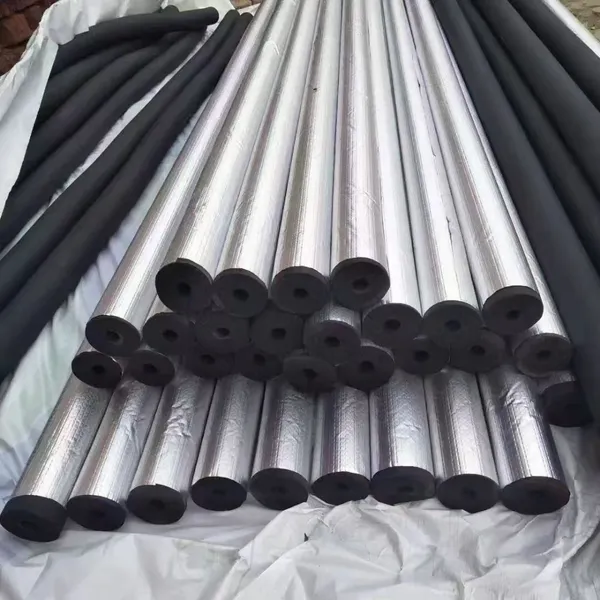
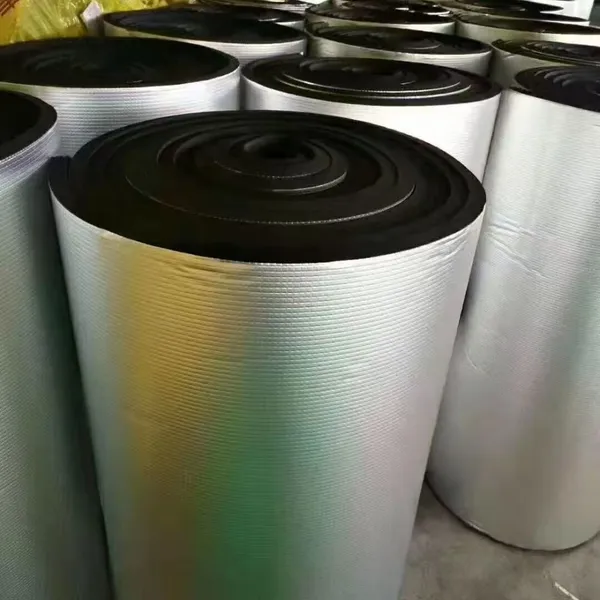
Even the lowest-conductivity insulation underperforms if gaps, compression, or thermal bridges bypass the insulation layer. Continuous insulation without seams or voids is the goal. Rigid boards like XPS provide dimensional stability that prevents settling. Closed-cell foams like rubber-plastic create monolithic seals around complex geometries.
Long-Term Thermal Stability
Some insulation materials degrade thermally over time. Polyisocyanurate boards can lose R-value in cold temperatures. Organic foams may off-gas blowing agents that reduce performance. Inorganic materials like rock wool and advanced materials like aerogel maintain stable thermal conductivity across decades of service.
Top Energy Efficient Insulation Materials by Performance
The following materials represent the most energy efficient options for commercial, industrial, and high-performance building applications. Each occupies a distinct position on the performance-cost spectrum. When evaluating thermal performance insulation for a specific project, engineers balance conductivity data against installation constraints, fire requirements, and life-cycle cost.
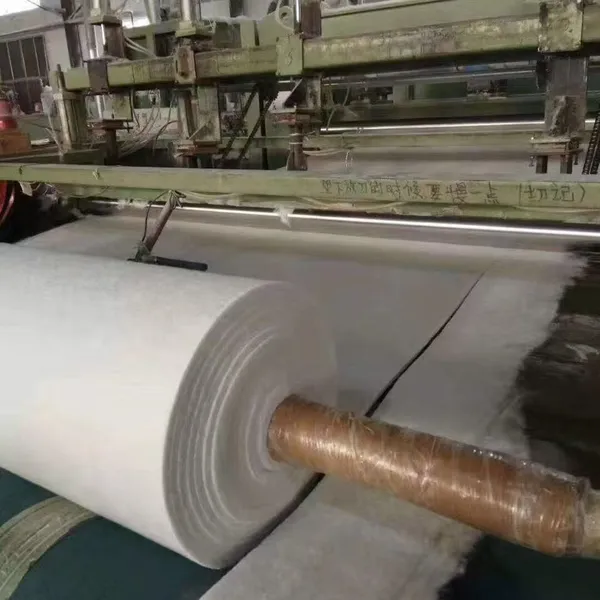
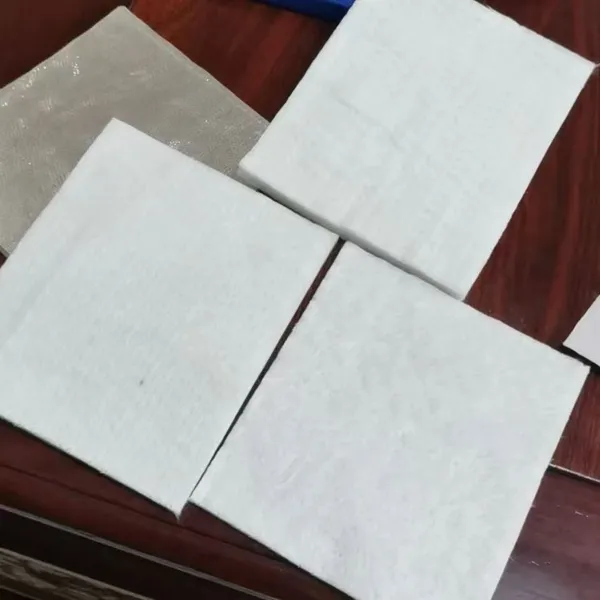
Nano Aerogel Insulation Felt
Aerogel insulation delivers the highest thermal resistance per unit thickness of any commercially available building insulation material.
| Property | Value |
|---|---|
| Thermal conductivity | approximately 0.018 W/(m·K) |
| R-value per 25 mm | approximately 1.4 m²·K/W |
| Service temperature | -200 degrees C to +650 degrees C |
| Thickness equivalence | 6 mm replaces 25 mm of conventional insulation |
Aerogel's nano-porous structure traps air in pores smaller than the mean free path of gas molecules, suppressing both conduction and convection. As a low thermal conductivity insulation, it outperforms every conventional material on a per-millimeter basis. For space-constrained retrofits or ultra-efficient envelopes, aerogel eliminates the performance compromise that usually accompanies thin insulation profiles.
The trade-off is cost per square meter. Aerogel is rarely the economical choice for standard new construction where clearance is unlimited. It becomes cost-effective when the alternative involves structural modifications, lost floor area, or premium equipment sizing driven by space constraints.
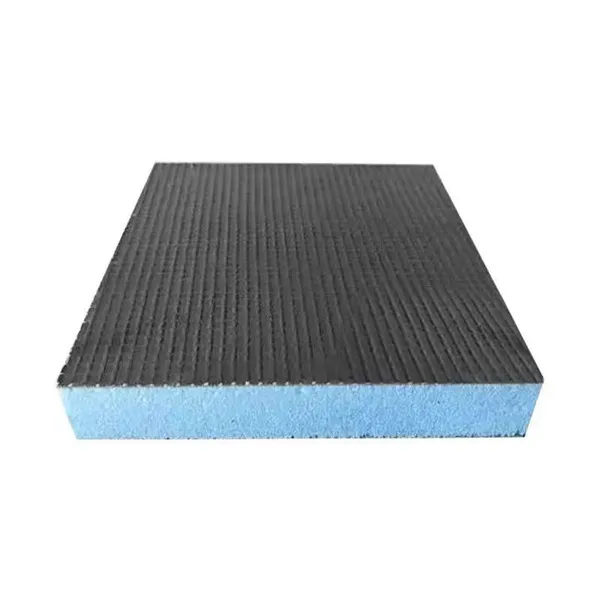
XPS Extruded Polystyrene Boards
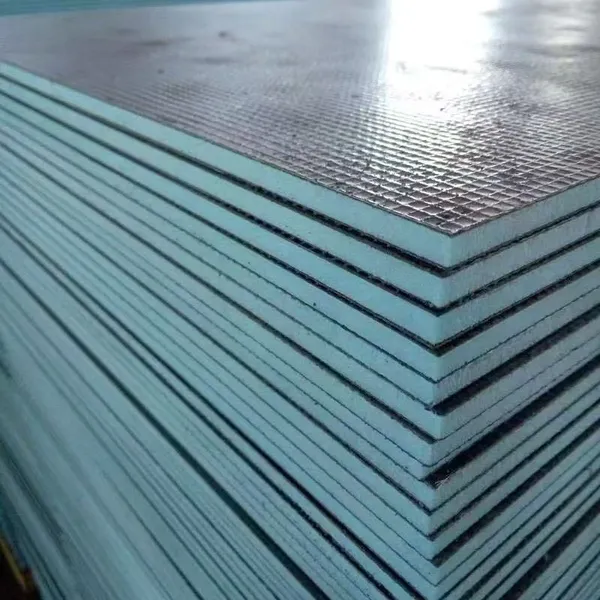
XPS insulation boards combine low thermal conductivity with high compressive strength, making them the default choice for below-grade and structural applications.
| Property | Value |
|---|---|
| Thermal conductivity | 0.028-0.036 W/(m·K) |
| R-value per 25 mm | approximately 0.7-0.9 m²·K/W |
| Compressive strength | 150-700 kPa |
| Water absorption | less than 1% by volume |
XPS maintains its R-value in moist environments. The closed-cell structure resists water absorption even in direct ground contact, which preserves thermal performance over decades. For foundation perimeters, inverted roofs, and cold storage floors, XPS provides energy efficiency with structural integrity.
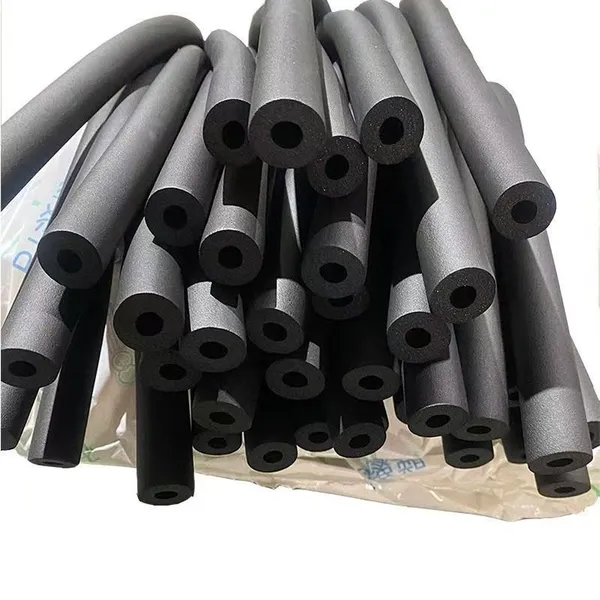
Rubber-Plastic Closed-Cell Foam
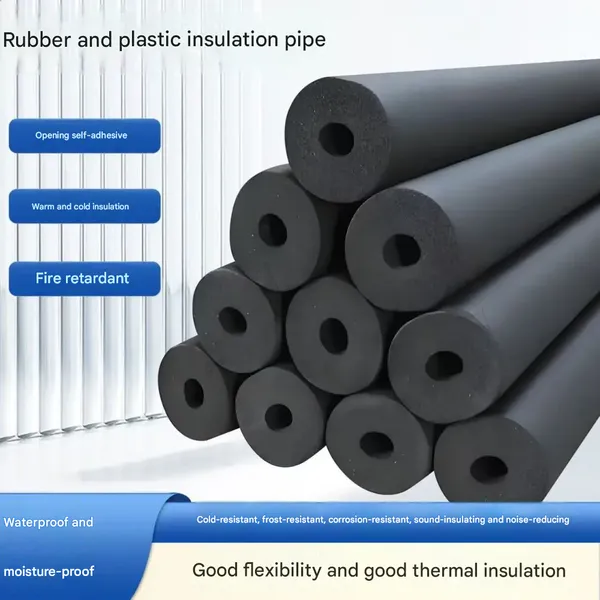
Rubber-plastic insulation achieves excellent thermal performance with the added benefit of inherent vapor resistance.
| Property | Value |
|---|---|
| Thermal conductivity | 0.034-0.038 W/(m·K) |
| R-value per 25 mm | approximately 0.66-0.74 m²·K/W |
| Water vapor permeability | less than or equal to 1.3 ng/(Pa·s·m) |
| Service temperature | -40 degrees C to +105 degrees C |
The closed-cell structure prevents moisture vapor from penetrating the insulation layer. This matters because wet insulation loses R-value. A fiberglass batt saturated to 5% moisture content by volume can lose 50% of its thermal resistance. Rubber-plastic avoids this degradation entirely.
For chilled water pipes, cold air ducts, and refrigeration equipment, rubber-plastic delivers energy efficiency and condensation control in a single material layer.
Rock Wool Mineral Fiber
Rock wool insulation offers energy efficiency combined with non-combustible fire performance.
| Property | Value |
|---|---|
| Thermal conductivity | less than or equal to 0.040 W/(m·K) |
| R-value per 25 mm | approximately 0.63 m²·K/W |
| Maximum service temperature | 650 degrees C |
| Fire rating | Non-combustible A1 (EN 13501-1) |
Rock wool's inorganic composition means it does not burn, melt, or emit toxic smoke. For high-temperature equipment and fire-rated building assemblies, it is the only insulation category that satisfies both energy efficiency and life safety requirements simultaneously. Learn more about global fire safety standards for insulation and how A1 non-combustible ratings protect building occupants.
Comparative Performance of Energy Efficient Insulation Materials
The following table summarizes thermal performance and application fit across the major material categories.
| Material | Thermal conductivity | R-value per 25 mm | Max temp | Moisture resistance | Best application |
|---|---|---|---|---|---|
| Aerogel | approximately 0.018 | approximately 1.4 | 650 degrees C | Excellent | Space-constrained retrofits, ultra-performance envelopes |
| XPS | 0.028-0.036 | 0.7-0.9 | 75 degrees C | Excellent | Foundations, roofs, floors under load |
| Rubber-plastic | 0.034-0.038 | 0.66-0.74 | 105 degrees C | Excellent | Cold pipes, ducts, condensation control |
| Rock wool | less than or equal to 0.040 | approximately 0.63 | 650 degrees C | Good with treatment | Fire-rated walls, high-temp equipment, acoustic |
This comparison reveals why experienced specifiers match material properties to application requirements. No single material dominates every metric. The optimal approach selects the right energy efficient insulation material for each building zone. For guidance on choosing between rock wool and rubber-plastic insulation, see our detailed comparison of these two common specifications.
How Energy Efficient Insulation Meets Building Energy Codes
Modern building energy codes set minimum insulation requirements based on climate zone and assembly type. Understanding these requirements helps specifiers select materials that comply while maximizing energy savings.
ASHRAE 90.1 and IECC Requirements
ASHRAE Standard 90.1 provides minimum R-value tables by climate zone for roofs, walls, floors, and mechanical systems. The 2022 edition increased requirements for most envelope components by 10-20% compared to the 2016 standard. Projects targeting LEED certification or net-zero performance typically specify insulation levels 30-50% above code minimum.
For HVAC and mechanical insulation, ASHRAE 90.1 mandates minimum thicknesses for ductwork and piping based on operating temperature and climate zone. Chilled water pipes in hot-humid climates require higher R-values to prevent condensation and energy loss.
Green Building Certification Contributions
Green building insulation choices directly impact certification scores and long-term operational carbon. Energy efficient insulation materials contribute points toward LEED, BREEAM, Green Mark, and other certification systems. Points are awarded for:
Exceeding baseline insulation requirements
Using materials with low embodied carbon
Specifying products with environmental product declarations (EPDs)
Achieving thermal bridging-free envelope designs
Rock wool manufactured from natural basalt and recycled slag supports green building credits through recycled content and inorganic composition. XPS boards with low-global-warming-potential blowing agents reduce the embodied carbon associated with rigid foam insulation. For projects requiring documented environmental credentials, our FM-certified insulation products include ISO9001, ISO14001, and full third-party test reports.
Application-Specific Selection for Maximum Energy Efficiency
Building Envelope and Facade
Exterior wall and roof assemblies account for the largest surface area of heat transfer in most buildings. For building envelope insulation, the goal is continuous R-value without thermal bridges. Specifying the right energy efficient building insulation for walls, roofs, and foundations determines whether the envelope performs as designed or bleeds conditioned air.
In high-rise buildings with curtain wall systems, rock wool boards behind spandrel panels provide fire-rated thermal protection. In low-rise commercial buildings, XPS boards in rainscreen assemblies deliver high R-value insulation with moisture resistance. For retrofit projects where interior space is limited, aerogel insulation on the interior face of masonry walls achieves target U-values with minimal thickness penalty.
When Klaus Weber led the energy retrofit of a 1970s office building in Hamburg, the existing solid brick walls provided only R-2.1. Local heritage regulations prohibited exterior cladding modifications. By installing 20 mm aerogel boards on the interior face with a new plaster finish, his team achieved R-4.5 without reducing room dimensions by more than 25 mm. Annual heating demand dropped 38%, and the project qualified for federal energy retrofit incentives.
HVAC and Mechanical Systems
Mechanical system insulation prevents energy loss from ducts and pipes while controlling condensation. The selection depends on operating temperature and ambient conditions.
For chilled water pipes below the dew point, rubber-plastic closed-cell foam is the standard specification. Its low thermal conductivity minimizes heat gain into the chilled water, reducing compressor runtime. For hot air ducts and equipment above ambient temperature, rock wool or fiberglass provides adequate thermal protection at moderate cost.
The insulation energy savings from properly insulating mechanical systems are substantial and immediate. An uninsulated 150 mm chilled water pipe in a 30 degrees C ambient environment can gain over 50 W per meter of run. At 1,000 meters of distribution piping, that is 50 kW of continuous parasitic load, equivalent to running a small chiller compressor full-time just to overcome heat gain.
Industrial Process Equipment
Boilers, furnaces, and high-temperature exhaust systems lose enormous amounts of energy through uninsulated surfaces. A single uninsulated square meter of steel surface at 300 degrees C radiates approximately 6,000 W. Proper industrial insulation pays for itself in weeks, not years.
Rock wool is the standard for continuous service up to 650 degrees C, delivering both energy savings and personnel protection. For equipment cycling between hot and cold states, the thermal mass of the insulation matters. Lightweight rock wool blankets respond faster to temperature changes than dense refractory materials, reducing startup energy consumption. Explore our industrial thermal insulation solutions for process-specific recommendations and high-temperature specification support.
Installation Factors That Affect Energy Efficiency
Even the most energy efficient insulation materials underperform if installed incorrectly. These factors determine whether an insulation system delivers its rated R-value for decades or degrades within the first season.
Compression and Gaps
Compression reduces the trapped air that provides thermal resistance. A rock wool batt compressed to 75% of its labeled thickness loses approximately 25% of its R-value. Rigid boards like XPS should be supported at regular intervals to prevent sagging in roof assemblies. Flexible foams like rubber-plastic should not be crushed by overtightened pipe clamps.
Gaps at seams, penetrations, and supports create thermal bypasses. Even a 5% gap area can reduce the effective R-value of an insulation assembly by 20-30%. Closed-cell spray-applied foams and pre-formed rubber-plastic tubes minimize gaps through monolithic coverage.
Thermal Bridging
Metal studs, concrete balconies, pipe hangers, and structural connections bypass insulation layers and create localized heat flow paths. In steel-framed walls with cavity insulation only, thermal bridging through studs can reduce the whole-wall R-value by 30-50% compared to the cavity insulation alone.
Continuous exterior insulation, such as XPS boards over steel studs or rock wool outboard of concrete frames, interrupts thermal bridges and brings the whole-assembly performance closer to the nominal insulation R-value.
Moisture Management
Wet insulation is ineffective insulation. A material that achieves R-4.0 when dry may deliver R-2.0 or less when saturated. Vapor barriers, proper facings, and closed-cell material selection prevent moisture accumulation.
In cold climates, vapor drive from warm interior to cold exterior can carry moisture into wall assemblies. In hot-humid climates, the reverse vapor drive from exterior to air-conditioned interior creates similar risks. Material selection must account for vapor direction, drying potential, and condensation risk.
Frequently Asked Questions About Energy Efficient Insulation Materials
Which Insulation Material Is the Most Energy Efficient?
Nano aerogel insulation has the lowest thermal conductivity at approximately 0.018 W/(m·K), making it the most energy efficient per unit thickness. For conventional construction where cost and compressive strength matter, XPS at 0.028-0.036 W/(m·K) and rubber-plastic at 0.034-0.038 W/(m·K) offer excellent performance at moderate cost.
How Much Energy Can Insulation Actually Save?
Properly specified and installed insulation can reduce building heating and cooling energy consumption by 30-50% compared to uninsulated or minimally insulated assemblies. For industrial process equipment, insulating hot surfaces can recover 80-90% of radiant heat loss, with payback periods often measured in months.
What R-Value Should I Target for Energy Efficiency?
Target R-values depend on climate zone and assembly type. ASHRAE 90.1 provides code minimums, but high-performance projects typically exceed these by 30-50%. For walls in cold climates, R-5.3 to R-6.2 m²·K/W is common for energy-efficient commercial construction. For roofs, R-8.8 to R-10.6 m²·K/W delivers strong energy savings.
Is Thicker Insulation Always Better?
Thicker insulation provides diminishing returns. Doubling insulation thickness doubles R-value but does not double energy savings. The economic optimum balances insulation cost against energy cost over the building life. For most climates, the cost-optimal insulation level is 10-20% above current code minimums.
Does Fire Rating Affect Energy Efficiency?
Fire rating and energy efficiency are independent properties, though some materials excel at both. Rock wool achieves A1 non-combustible fire ratings with thermal conductivity of less than or equal to 0.040 W/(m·K), making it both fire-safe and energy efficient. Aerogel also combines A1 fire performance with ultra-low thermal conductivity.
Can Old Insulation Be Upgraded for Better Energy Efficiency?
Existing insulation can often be upgraded through retrofit strategies. Exterior overcladding with rigid boards, interior aerogel layers in space-constrained areas, and mechanical system re-insulation all improve energy performance without full demolition. The key is addressing thermal bridges and air leakage, not just adding R-value.
Conclusion
Energy efficient insulation materials are foundational to reducing building operating costs, meeting energy codes, and achieving sustainability targets. The most efficient specification does not rely on a single material across every application. Instead, it matches material properties to performance requirements.
Aerogel insulation conquers space constraints with ultra-low thermal conductivity. XPS boards provide compressive strength and moisture resistance for structural applications. Rubber-plastic foam delivers energy efficiency and condensation control for mechanical systems. Rock wool combines thermal performance with non-combustible fire safety for high-temperature and fire-rated assemblies.
The key takeaway is that energy efficiency is a system property, not just a material property. Thickness, installation quality, moisture management, and thermal bridge mitigation matter as much as the labeled R-value. A holistic approach to insulation specification delivers real energy savings that persist across the building's design life.
At DaCheng BangMei, our technical team calculates U-values, evaluates condensation risk, and recommends insulation systems tailored to your climate zone, energy code, and performance targets. We supply rock wool, rubber-plastic, XPS, and aerogel insulation materials with custom dimensions, densities, and facings matched to your exact requirements.
Ready to optimize your project's energy performance? Request a custom quote or speak with our engineers about your insulation specification.
Recently Posted
-
Insulation for Metal Buildings: Complete Buyer's Guide 2026
June 24, 2026A warehouse manager in Texas watched his electricity bill climb every summer. The metal roof turned the building into a solar oven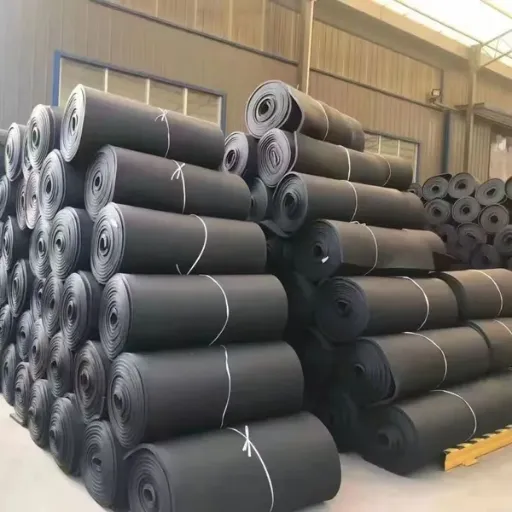 Read More
 -
Insulation Materials Comparison: How to Select the Right Type for Your Project
June 24, 2026The procurement manager stared at six quotations on her screen. Each supplier recommended a different insulation material for the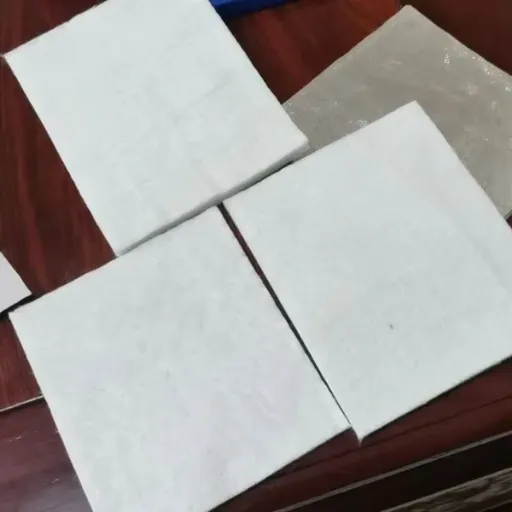 Read More
 -
Thermal Conductivity of Insulation Materials: A Specifier's Guide
June 24, 2026Ahmed Hassan spent three weeks reconciling quotes for a cold storage expansion in Dubai. One supplier quoted 80 mm rubber-plastic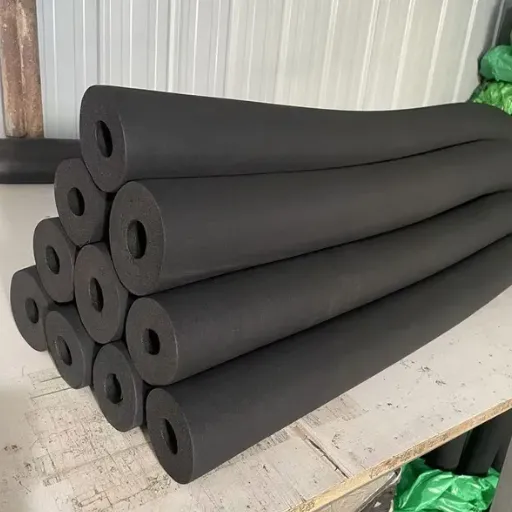 Read More
 -
Basement Insulation Board: Complete Buyer's Guide | DaCheng BangMei
June 24, 2026A homeowner in Michigan finished their basement with standard fiberglass batts and drywall. Two winters later, the bottom plates w Read More

Contact Us
Recommended Products
-
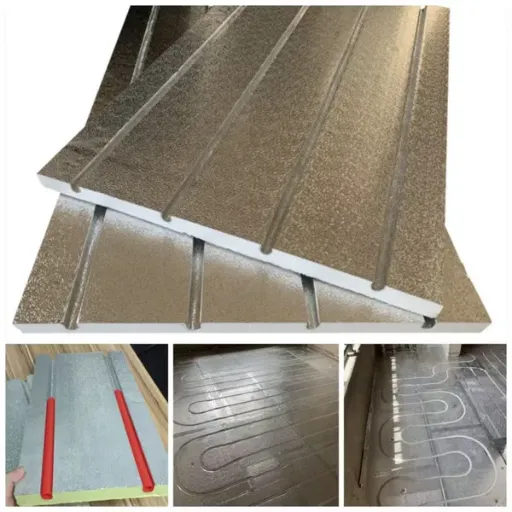
 Eco-Friendly Aluminum Foil Foam Board for Underfloor Heating SolutionsNegotiableMOQ: 100 Pieces
 -
Rubber Plastic Insulation Board Waterproof for Industrial Thermal InsulationNegotiableMOQ: 500 Square Meters
-
Premium Soft Silica Nano Aerogel Felt Sheets for Industrial Heat InsulationNegotiableMOQ: 50 Meters
-
Customizable PVC Magnetic Door Curtain Roll for Home & Kitchen UseNegotiableMOQ: 500 Kilograms
-
XPS Waterproof Board for Underground Garage Moisture BarrierNegotiableMOQ: 50 Square Meters
-
Heavy Duty Titanium Steel Mesh Magnetic Door Curtain With Reinforced EdgesNegotiableMOQ: 10 Pieces
-
Rubber Plastic Insulation Tube for Refrigeration & Cold Storage PipelineNegotiableMOQ: 500 Square Meters
-
Durable Aluminum Dry Floor Heating Panel With High Thermal ConductivityNegotiableMOQ: 100 Pieces
-
Nano Aerogel Felt Insulation Material for Cold Protection and Energy EfficiencyNegotiableMOQ: 50 Meters
-
High-Temperature Nano Silica Aerogel Felt for Pipe Fire and Thermal InsulationNegotiableMOQ: 50 Meters
-
Insulated PVC Magnetic Door Curtain for Thermal Insulation in Bedroom & KitchenNegotiableMOQ: 500 Kilograms
-
Professional Aluminum Foil Foam Board for Dry Underfloor Heating SystemsNegotiableMOQ: 100 Pieces
-
Aluminum Underfloor Heating Module for Commercial and Residential UseNegotiableMOQ: 100 Pieces
-
XPS Waterproof Board 10mm Thickness for Roofing InsulationNegotiableMOQ: 50 Square Meters
-
Custom Size Titanium Steel Mesh Magnetic Door Curtain for Warehouse Pest ControlNegotiableMOQ: 10 Pieces
-
Flame Retardant Thermal Insulation Sponge for Rubber & Plastic Pipes - Fireproof Factory DirectNegotiableMOQ: 500 Square Meters
-
Cold Insulation Rubber Plastic Board for HVAC and Industrial Pipeline ApplicationsNegotiableMOQ: 500 Square Meters
-
20mm XPS Thermal Insulation Panel for Dry Underfloor Heating SystemsNegotiableMOQ: 100 Pieces
-
High Temperature Resistant Foam Insulation Tube for Air Conditioner DuctsNegotiableMOQ: 500 Meters
-
XPS Tile Backer Board Waterproof Insulation for Wall & BathroomNegotiableMOQ: 500 Square Meters