
 Business License

Industrial Insulation Materials: How to Specify for Boilers, Furnaces, and Process Equipment
When the maintenance supervisor at a petrochemical refinery in Rotterdam noticed the surface temperature of a reformer furnace had climbed 35 degrees C above design, he ordered an infrared survey of the entire unit. The results were sobering: 40% of the existing refractory lining had degraded beyond repair, and heat loss was bleeding the plant of $380,000 in fuel costs annually. Worse, the outer shell temperature in several zones exceeded personnel protection limits, creating an immediate safety citation risk.
The root cause was not the operating temperature itself. The reformer ran at 850 degrees C, well within the design envelope. The problem was the specification of industrial insulation materials that could not withstand the combined thermal, chemical, and mechanical stresses of continuous process operation. The original contractor had substituted a lower-grade ceramic blanket to save cost, and after only four years the material had compacted, sintered, and lost 60% of its insulating value.
Selecting the right industrial insulation materials for process equipment is not about finding the lowest thermal conductivity. It is about matching material properties to the full spectrum of operating conditions: maximum temperature, thermal cycling frequency, chemical exposure, vibration, mechanical load, and fire safety requirements. The insulation that performs perfectly in a steady-state boiler may fail catastrophically in a thermally cycling furnace or a cryogenic LNG pipeline.
At DaCheng BangMei, operating under Huaneng Zhongtian's 40-year manufacturing base, we supply rock wool, rubber-plastic, aerogel, and XPS insulation engineered for industrial applications from 650 degrees C process equipment to minus 196 degrees C cryogenic systems. This guide breaks down industrial insulation materials by application type, explaining which materials excel where, and why.
Need help specifying industrial insulation for your process equipment? Speak with our technical engineers for complimentary thermal calculations and material selection guidance.
How Process Conditions Dictate Industrial Insulation Selection
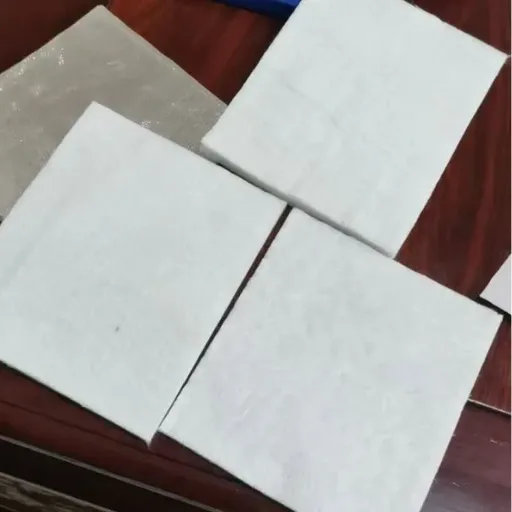
Before comparing materials, understand how each process condition creates a unique set of performance constraints. High temperature insulation faces different challenges than cryogenic insulation or steam pipe insulation systems.
Temperature Range and Thermal Cycling
Industrial processes span temperature extremes that building insulation never encounters. Boiler insulation may see steady-state operation at 300-550 degrees C. Furnace insulation in metallurgical or petrochemical applications can experience peak temperatures of 1,200 degrees C or higher. Cryogenic insulation for LNG and industrial gas systems must perform at minus 196 degrees C without cracking or losing flexibility.
Thermal cycling adds another dimension. Equipment that heats up and shuts down daily imposes expansion and contraction stresses on insulation that steady-state equipment does not. Materials with poor thermal shock resistance, including some dense refractories, will crack and spall under cyclic loading.
Chemical and Environmental Exposure
Petrochemical insulation must resist hydrocarbon exposure, acid gas attack, and steam purge conditions. Power plant insulation faces high-velocity ash erosion and sulfur corrosion. Food and pharmaceutical process insulation must meet hygiene standards while maintaining thermal performance. Each environment eliminates certain material categories and favors others.
Mechanical Loads and Vibration
Process equipment generates vibration, pressure pulses, and thermal expansion forces that building insulation rarely sees. Industrial thermal insulation must maintain position and integrity under these dynamic loads without compacting, settling, or creating gaps that act as thermal bridges.
Boiler and Furnace Insulation
Boilers and furnaces represent the most demanding high temperature insulation applications. Specifying the right boiler insulation and furnace insulation for continuous operation at elevated temperatures requires materials that maintain structural integrity, low thermal conductivity, and dimensional stability across thousands of operating hours.
High-Temperature Rock Wool Applications
Rock wool is the workhorse of boiler and furnace insulation for temperatures up to 650 degrees C. Its inorganic basalt fiber structure does not burn, melt, or emit toxic gases under fire conditions. At DaCheng BangMei, our Yalong rock wool boards achieve thermal conductivity of less than or equal to 0.040 W/(m·K) at service temperatures up to 650 degrees C, with density options from 40-200 kg/m³ to match structural and thermal requirements. This low thermal conductivity translates to a high R-value per unit thickness, reducing overall insulation volume requirements.
For boiler walls and furnace enclosures, 120-160 kg/m³ density boards provide the compressive strength needed to support cladding and weatherproofing layers without sagging. The water-repellent treatment option ensures that incidental moisture from rain or washdown does not degrade thermal performance during outages.
Refractory and Ceramic Fiber Systems
Above 650 degrees C, rock wool transitions to refractory and ceramic fiber solutions. Ceramic fiber blankets rated for 1,260 degrees C provide flexible, lightweight insulation for furnace doors, expansion joints, and irregular surfaces. Castable refractories handle the hot-face lining of combustion chambers where temperatures exceed 1,200 degrees C and slag or ash contact occurs.
The selection hierarchy is straightforward: rock wool for the outer casing and moderate-temperature zones (up to 650 degrees C), ceramic fiber for the intermediate layer (650-1,200 degrees C), and dense refractory for the hot face (above 1,200 degrees C or where abrasion resistance is required).
When Chen Wei, a process engineer at a chemical plant in Jiangsu, retrofitted the insulation on a 450 degrees C reboiler, he specified a dual-layer system: 100 mm of 140 kg/m³ rock wool board against the shell, covered by aluminum-clad weatherproofing. The previous single-layer ceramic blanket installation had compacted to 60% of its original thickness after three years, causing a 22% increase in fuel consumption. The rock wool retrofit restored the design U-value, and after 18 months of operation the insulation showed no measurable settlement or thermal degradation.
Boiler Insulation Comparison
| Application | Primary Material | Density | Max Temp | Key Benefit | Limitation |
|---|---|---|---|---|---|
| Boiler outer casing | Rock wool board | 120-160 kg/m³ | 650 degrees C | Non-combustible, water-repellent | Not suitable above 650 degrees C |
| Furnace intermediate layer | Ceramic fiber blanket | 64-128 kg/m³ | 1,260 degrees C | Lightweight, thermal shock resistant | Lower compressive strength |
| Combustion chamber hot face | Castable refractory | 1,800-2,200 kg/m³ | 1,400+ degrees C | Abrasion and slag resistance | Heavy, requires anchoring |
| Expansion joints | Ceramic fiber module | 160-192 kg/m³ | 1,260 degrees C | Compressible, accommodates movement | Requires stainless steel anchoring |
Petrochemical and Process Plant Insulation
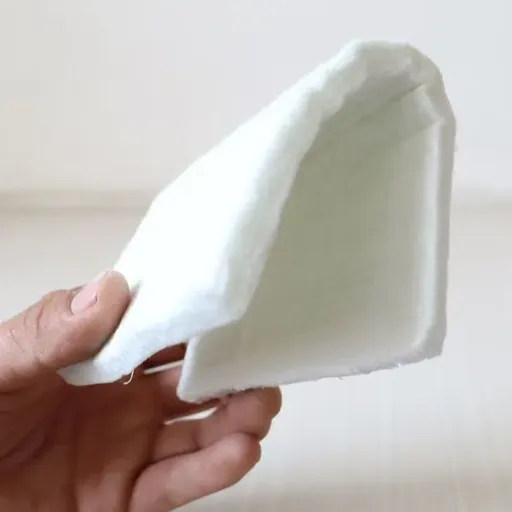
Petrochemical facilities combine high temperatures with aggressive chemical environments, making material selection particularly critical. The wrong industrial insulation materials in a refinery can lead to corrosion under insulation (CUI), a phenomenon that costs the industry billions annually.
Corrosion Under Insulation (CUI) Prevention
CUI occurs when water penetrates the insulation layer and becomes trapped against the metal substrate, accelerating corrosion. In petrochemical applications, the closed-cell structure of rubber-plastic insulation provides inherent moisture resistance, while rock wool requires careful weatherproofing and cladding design to prevent water ingress.
For process lines operating between ambient and 105 degrees C, rubber-plastic closed-cell foam is often the preferred specification because it does not absorb water and does not require an additional vapor barrier. For high-temperature process lines above 105 degrees C, rock wool with proper aluminum or stainless steel cladding is the standard, with particular attention paid to sealing all joints and penetrations.
High-Temperature Process Lines
Distillation columns, catalytic reformers, and cracking units operate at temperatures where rock wool dominates. The critical specification factor is density: 100-160 kg/m³ for vertical vessels where compaction must be prevented, and 80-120 kg/m³ for horizontal pipe runs where weight is a concern.
For petrochemical insulation applications, the ASTM C547 and C592 standards provide baseline specifications for pipe and board insulation materials. Our FM-certified rock wool products meet these international standards with full third-party documentation, simplifying specification for projects with international ownership or financing requirements.
When Maria Santos specified the insulation for a new FCC unit at a refinery in Brazil, she faced a classic petrochemical challenge: 28 process lines ranging from 40 degrees C to 520 degrees C, each requiring a different insulation system. For the sub-105 degrees C lines, she specified rubber-plastic pipe insulation with aluminum jacketing. For the 105-400 degrees C range, she used 120 kg/m³ rock wool with stainless steel banding. For the three lines above 400 degrees C, she added a ceramic fiber overlay beneath the rock wool. The layered approach reduced total insulation weight by 15% compared to an all-refractory design while meeting every temperature requirement.
Power Plant Insulation
Power generation facilities, including coal, gas, and nuclear plants, impose a unique combination of high temperatures, vibration, and regulatory scrutiny on their power plant insulation systems.
Steam Turbine and Boiler Insulation
Steam turbines and high-pressure boilers in power plants operate at temperatures of 540-600 degrees C and pressures of 150-250 bar. The insulation must withstand these conditions while accommodating thermal expansion of the turbine casing and steam piping. Rock wool boards and blankets are the standard for these applications, with 140-200 kg/m³ densities providing the rigidity needed for turbine casing insulation without adding excessive weight.
HRSG and Combined Cycle Plants
Heat recovery steam generators (HRSGs) in combined cycle gas turbine plants present thermal cycling challenges that steady-state coal plants do not. The rapid startup and shutdown cycles typical of peaking plants impose thermal shock on insulation materials. Rock wool's thermal shock resistance and dimensional stability make it well-suited for HRSG ductwork, stacks, and casing insulation.
Acoustic and Thermal Combined Requirements
Power plants often require insulation that provides both thermal performance and noise attenuation. Gas turbine exhaust ducts, combustion air intakes, and boiler rooms generate noise levels that exceed occupational exposure limits. Rock wool's fibrous structure absorbs sound energy effectively, making it the standard for combined thermal-acoustic applications in power generation.
Cryogenic and Low-Temperature Insulation
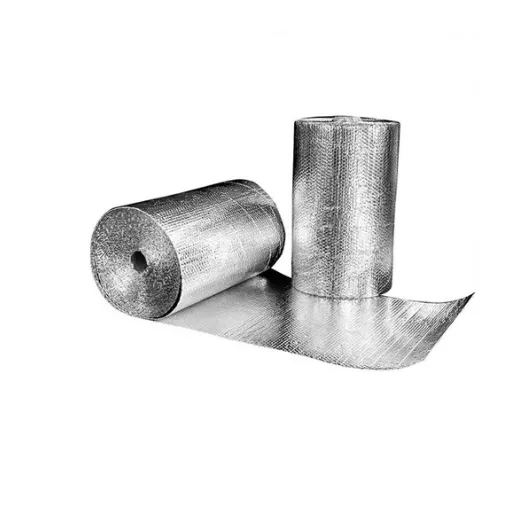
At the opposite end of the temperature spectrum, cryogenic insulation materials must maintain flexibility and thermal performance at temperatures that would make conventional insulation brittle and ineffective.
LNG and Industrial Gas Applications
Liquefied natural gas is stored and transported at minus 162 degrees C. Industrial gases including nitrogen, oxygen, and argon are handled at even lower temperatures, approaching minus 196 degrees C. At these extremes, only specialized materials maintain their insulating properties.
The Deep Cold Polymer ultra-low temperature rubber-plastic from DaCheng BangMei is engineered for cryogenic service down to minus 196 degrees C. Unlike standard rubber-plastic that becomes brittle below minus 40 degrees C, the deep cold formulation maintains flexibility and closed-cell structure at LNG temperatures, preventing ice formation and thermal bridging.
Cryogenic Pipe and Vessel Insulation
Cryogenic pipe insulation typically uses a multi-layer approach: an inner layer of flexible aerogel felt or deep cold rubber-plastic directly on the cold pipe, surrounded by rock wool or perlite block for additional thermal resistance, all enclosed in a vapor-tight outer jacket. The inner layer must accommodate pipe contraction without cracking, while the outer layer provides the bulk of the thermal resistance.
For tank insulation, perlite powder in the annular space between inner and outer tank shells is the traditional solution for LNG storage. For smaller vessels and equipment where perlite is impractical, vacuum-insulated panels or multi-layer aerogel systems provide equivalent performance in a thinner profile.
Cryogenic Insulation Comparison
| Temperature Range | Primary Material | Secondary Material | Key Consideration |
|---|---|---|---|
| 0 to minus 50 degrees C | Standard rubber-plastic | Rock wool | Condensation control |
| Minus 50 to minus 100 degrees C | Deep cold rubber-plastic | Aerogel felt | Flexibility retention |
| Minus 100 to minus 196 degrees C | Deep cold rubber-plastic / Aerogel | Perlite block | Thermal contraction accommodation |
| LNG storage tanks | Perlite powder | Vacuum panels | Long-term stability, no maintenance |
Steam Pipe and Process Line Insulation
Steam distribution systems are the circulatory system of industrial facilities, and their insulation directly impacts energy efficiency, safety, and steam quality.
High-Pressure Steam Lines
High-pressure steam lines operating at 200-600 degrees C require insulation that maintains low thermal conductivity across the full temperature range while supporting the weight of cladding and weatherproofing. Rock wool pipe insulation with densities of 120-180 kg/m³ is the standard for these applications, with pre-formed pipe sections that slip over the pipe and are secured with stainless steel banding.
For effective steam pipe insulation, the critical calculation is economic thickness: the insulation thickness that minimizes the sum of energy loss and insulation cost over the project life. At DaCheng BangMei, our technical team performs these calculations using ASHRAE 90.1 methods and plant-specific fuel costs to determine the optimal thickness for each steam line.
Condensate and Low-Pressure Systems
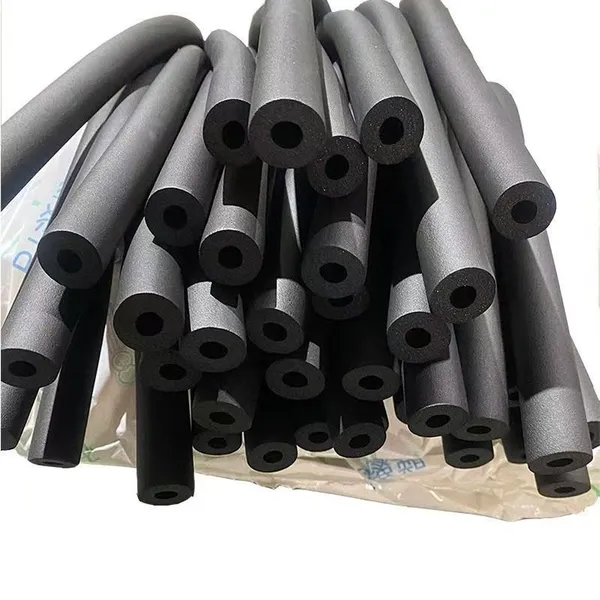
Condensate return lines and low-pressure steam systems operate at temperatures where both rock wool and rubber-plastic are viable. Rubber-plastic closed-cell foam is often preferred for these applications due to its ease of installation and built-in moisture resistance. The pre-slit tube design allows installation without shutting down the system, a significant advantage in continuous-process plants.
When Oleg Kuznetsov upgraded the steam distribution insulation at a food processing plant in Moscow, he calculated that the existing 50-year-old asbestos-containing insulation was losing 34% more heat than a modern rock wool system. By replacing the insulation on 2,400 meters of steam lines with 100 mm of 140 kg/m³ rock wool pipe sections and new aluminum cladding, he reduced boiler fuel consumption by 12% and eliminated the asbestos hazard. Payback period was 14 months at local natural gas prices.
Tank and Vessel Insulation
Storage tanks, pressure vessels, and reactors require insulation that conforms to curved surfaces, accommodates thermal expansion, and withstands external environmental exposure.
Storage Tank Insulation
For ambient and heated storage tanks, rock wool boards applied in vertical layers with stainless steel bands provide durable, long-lasting insulation. The boards are cut to fit the tank curvature and are held in place with banding straps welded to anchor clips on the tank shell. A weatherproof outer layer of aluminum or stainless steel cladding protects the insulation from rain and mechanical damage.
For cryogenic storage tanks, the insulation system is integral to the tank design. Double-wall tanks with perlite-filled annular spaces provide passive, maintenance-free insulation for LNG and liquid nitrogen storage. For existing tanks being retrofitted, external application of rock wool with vapor-tight cladding is the standard approach.
Reactor and Column Insulation
Chemical reactors and distillation columns present complex geometries that require flexible insulation materials. Rock wool blankets and mats conform to curved heads, nozzles, and manways better than rigid boards. For columns with internal heating or cooling jackets, the insulation must be designed around the jacket penetrations without creating thermal bridges.
Fire Safety in Industrial Insulation
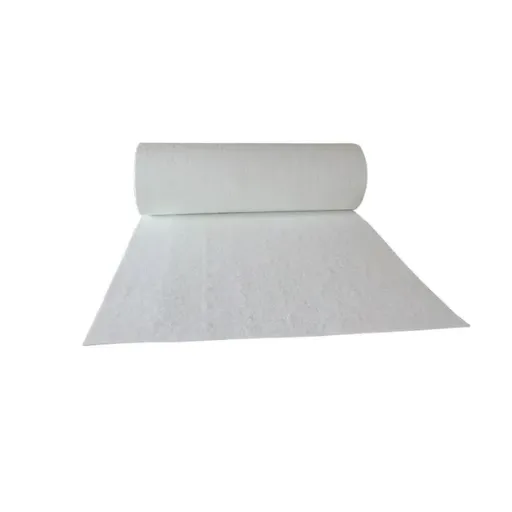
Industrial facilities handle flammable materials, high temperatures, and ignition sources. The insulation system must not contribute to fire risk and, in many cases, must actively prevent fire spread.
Non-Combustible Requirements
Process areas in petrochemical, oil and gas, and chemical plants typically require non-combustible insulation. Rock wool—also known as mineral wool—achieves A1 non-combustible classification under EN 13501-1, meaning it does not contribute to fire at any stage. This is why it is specified for furnace casings, boiler rooms, and process areas where fire safety is paramount.
For passive fire protection of structural steel, curtain wall fireproof rock wool with densities of 100-160 kg/m³ provides the fire resistance ratings and fire rating documentation required by API and NFPA standards. The insulation maintains steel temperatures below critical thresholds during hydrocarbon pool fires, preventing structural collapse.
Flame-Retardant Organic Materials
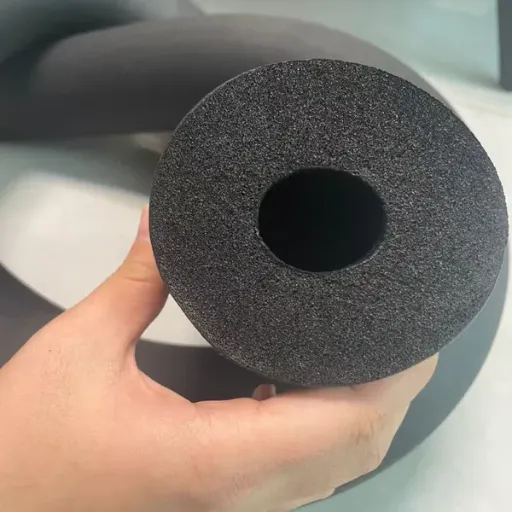
Rubber-plastic insulation achieves Class B1 flame retardancy under GB 8624, resisting ignition and self-extinguishing when the flame source is removed. While not suitable for fire-rated structural assemblies, it is acceptable for mechanical system insulation in general process areas where non-combustible materials are not mandated.
Comparative Guide to Industrial Insulation Materials
The following matrix summarizes which insulation materials excel in each industrial application, helping specifiers narrow their selection quickly. For a deeper comparison of our core flexible insulation materials, see our guide on choosing between rock wool and rubber-plastic insulation.
| Industrial Application | Primary Material | Secondary Material | Key Selection Criteria |
|---|---|---|---|
| Boiler outer casing (less than 650 degrees C) | Rock wool board | Ceramic fiber | Non-combustible, compressive strength, water repellency |
| Furnace hot face (more than 1,200 degrees C) | Castable refractory | Ceramic fiber | Abrasion resistance, slag resistance, anchoring compatibility |
| Furnace intermediate (650-1,200 degrees C) | Ceramic fiber blanket | Rock wool board | Thermal shock resistance, lightweight |
| Petrochemical process lines (more than 105 degrees C) | Rock wool pipe | Ceramic fiber | CUI resistance with proper cladding, temperature rating |
| Petrochemical process lines (less than 105 degrees C) | Rubber-plastic pipe | Rock wool | Moisture resistance, ease of installation |
| Power plant steam turbines | Rock wool board | Ceramic fiber | Vibration resistance, thermal cycling, combined acoustic performance |
| HRSG ductwork | Rock wool blanket | Ceramic fiber | Thermal shock, dimensional stability |
| LNG/cryogenic pipes (minus 196 degrees C) | Deep cold rubber-plastic | Aerogel felt | Flexibility at cryogenic temps, closed-cell structure |
| Cryogenic storage tanks | Perlite powder | Vacuum panels | Long-term stability, no maintenance |
| Steam distribution (more than 200 degrees C) | Rock wool pipe | Ceramic fiber | Economic thickness, compressive strength |
| Storage tanks (ambient/heated) | Rock wool board | Mineral wool | Weather resistance, mechanical protection |
| Structural steel fireproofing | Rock wool board | Spray cementitious | Fire rating duration, hydrocarbon fire resistance |
Frequently Asked Questions About Industrial Insulation Materials
What Is the Best Industrial Insulation Material for High Temperatures?
For temperatures up to 650 degrees C, rock wool is the best all-around industrial insulation material due to its non-combustible performance, thermal stability, and mechanical strength. For temperatures between 650 and 1,200 degrees C, ceramic fiber blankets and boards are the standard. Above 1,200 degrees C, dense castable refractories are required for hot-face applications.
How Do I Prevent Corrosion Under Insulation in Petrochemical Plants?
Prevent CUI by selecting closed-cell materials like rubber-plastic for sub-105 degrees C lines where water ingress is most likely. For high-temperature lines using rock wool, specify proper cladding design with sealed joints, use stainless steel banding in corrosive environments, and implement an inspection program that removes insulation at suspect locations for substrate examination.
What Insulation Is Best for Steam Pipes in Power Plants?
Rock wool pipe insulation with densities of 120-180 kg/m³ is the standard for high-pressure steam lines in power plants. It provides the thermal performance, compressive strength, and fire safety required by power generation codes. The economic thickness should be calculated based on steam temperature, pipe diameter, fuel cost, and operating hours.
Can Rubber-Plastic Insulation Be Used on Hot Process Equipment?
Standard rubber-plastic insulation is limited to 105 degrees C maximum service temperature. For equipment operating above this limit, rock wool or ceramic fiber is required. However, for process lines, condensate systems, and low-pressure steam operating below 105 degrees C, rubber-plastic is often the preferred material due to its moisture resistance and ease of installation.
What Is the Best Insulation for Cryogenic Applications?
For cryogenic temperatures down to minus 196 degrees C, deep cold polymer rubber-plastic and aerogel felt are the primary flexible insulation materials. For large LNG storage tanks, perlite powder in annular spaces is the traditional solution. The selection depends on whether the application requires flexibility (pipes, equipment) or passive long-term stability (storage tanks).
How Often Should Industrial Insulation Be Inspected?
Industrial insulation should be visually inspected annually and thermographically surveyed every 2-3 years. Pay special attention to areas with known CUI risk, thermal cycling, or mechanical damage. Insulation that shows wet spots, oil saturation, physical damage, or significant settlement should be replaced promptly to prevent energy loss and safety hazards.
Do Industrial Insulation Materials Require Special Certifications?
Yes. Industrial projects often require FM Global approval, ISO9001 quality certification, and specific fire test reports. Petrochemical facilities may require API compliance documentation. Power plants may need ASME or DIN certification. At DaCheng BangMei, our certified insulation products include full third-party documentation for international project requirements. Engineers can also download technical data sheets for detailed thermal and mechanical specifications.
Conclusion
Selecting the right industrial insulation materials for each application is critical to long-term performance. The rock wool that performs flawlessly in a 500 degrees C boiler may be entirely unsuitable for a minus 196 degrees C LNG pipeline. The ceramic fiber that insulates a 1,200 degrees C furnace may compact and fail under the vibration of a gas turbine. Successful specification begins with understanding the full operating environment and matching material properties to every demand.
Rock wool dominates boiler casings, steam lines, and petrochemical process equipment up to 650 degrees C because it combines thermal performance with A1 non-combustible safety and mechanical durability. Ceramic fiber fills the gap between 650 and 1,260 degrees C where lightweight, thermal-shock-resistant insulation is essential. Deep cold rubber-plastic and aerogel solve cryogenic challenges where conventional materials become brittle and ineffective. Rubber-plastic closed-cell foam provides moisture-resistant, easy-to-install solutions for sub-105 degrees C process lines and chilled systems.
The most efficient industrial facilities do not treat insulation as an afterthought. They engineer insulation systems as integral components of process design, calculating economic thickness, specifying for the full operating envelope, and inspecting regularly to maintain performance across decades of service.
At DaCheng BangMei, operating from Huaneng Zhongtian's 5G smart factory, our engineers analyze process conditions, calculate heat loss and surface temperatures, and recommend insulation systems from our rock wool, rubber-plastic, XPS, and aerogel product ranges. We supply custom dimensions, densities, and facings matched to your specific industrial applications, with full certification documentation for international projects.
Ready to specify the right insulation for your process equipment? Request a custom quote or speak with our technical team about your temperature, chemical, and mechanical requirements.
Recently Posted
-
Insulation for Metal Buildings: Complete Buyer's Guide 2026
June 24, 2026A warehouse manager in Texas watched his electricity bill climb every summer. The metal roof turned the building into a solar oven Read More
 -
Insulation Materials Comparison: How to Select the Right Type for Your Project
June 24, 2026The procurement manager stared at six quotations on her screen. Each supplier recommended a different insulation material for the Read More
 -
Thermal Conductivity of Insulation Materials: A Specifier's Guide
June 24, 2026Ahmed Hassan spent three weeks reconciling quotes for a cold storage expansion in Dubai. One supplier quoted 80 mm rubber-plastic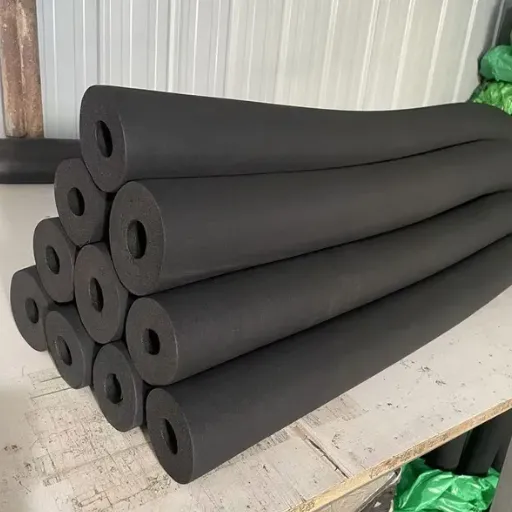 Read More
 -
Basement Insulation Board: Complete Buyer's Guide | DaCheng BangMei
June 24, 2026A homeowner in Michigan finished their basement with standard fiberglass batts and drywall. Two winters later, the bottom plates w Read More

Contact Us
Recommended Products
-
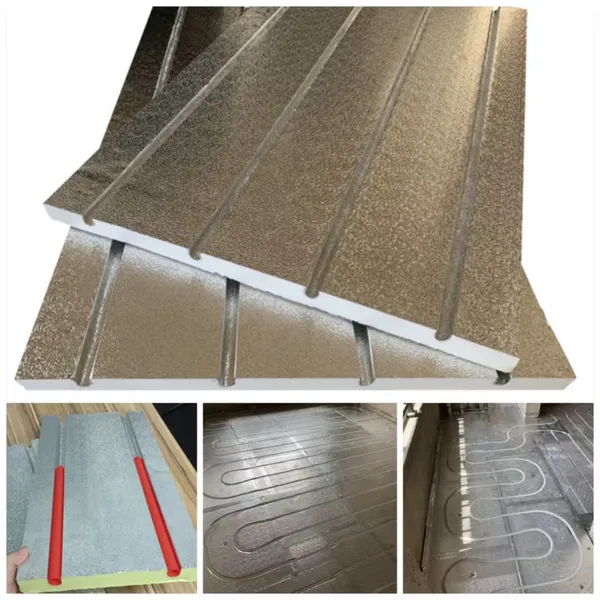
 Eco-Friendly Aluminum Foil Foam Board for Underfloor Heating SolutionsNegotiableMOQ: 100 Pieces
 -
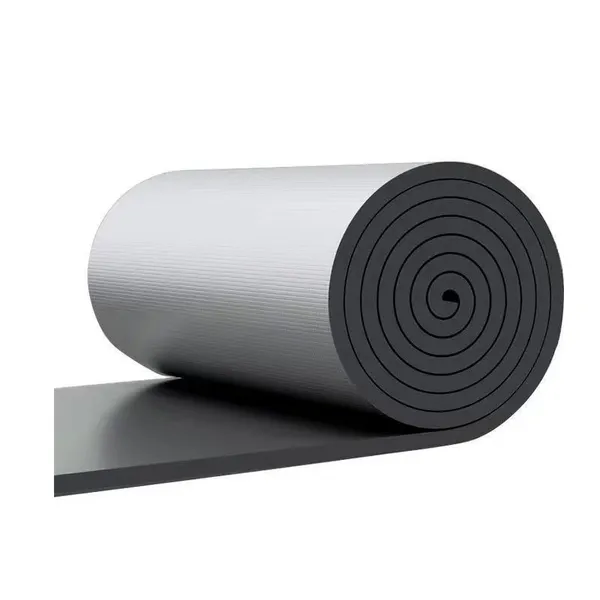
Rubber Plastic Insulation Board Waterproof for Industrial Thermal InsulationNegotiableMOQ: 500 Square Meters
-
Premium Soft Silica Nano Aerogel Felt Sheets for Industrial Heat InsulationNegotiableMOQ: 50 Meters
-
Customizable PVC Magnetic Door Curtain Roll for Home & Kitchen UseNegotiableMOQ: 500 Kilograms
-
XPS Waterproof Board for Underground Garage Moisture BarrierNegotiableMOQ: 50 Square Meters
-
Heavy Duty Titanium Steel Mesh Magnetic Door Curtain With Reinforced EdgesNegotiableMOQ: 10 Pieces
-
Rubber Plastic Insulation Tube for Refrigeration & Cold Storage PipelineNegotiableMOQ: 500 Square Meters
-
Durable Aluminum Dry Floor Heating Panel With High Thermal ConductivityNegotiableMOQ: 100 Pieces
-
Nano Aerogel Felt Insulation Material for Cold Protection and Energy EfficiencyNegotiableMOQ: 50 Meters
-
High-Temperature Nano Silica Aerogel Felt for Pipe Fire and Thermal InsulationNegotiableMOQ: 50 Meters
-
Insulated PVC Magnetic Door Curtain for Thermal Insulation in Bedroom & KitchenNegotiableMOQ: 500 Kilograms
-
Professional Aluminum Foil Foam Board for Dry Underfloor Heating SystemsNegotiableMOQ: 100 Pieces
-
Aluminum Underfloor Heating Module for Commercial and Residential UseNegotiableMOQ: 100 Pieces
-
XPS Waterproof Board 10mm Thickness for Roofing InsulationNegotiableMOQ: 50 Square Meters
-
Custom Size Titanium Steel Mesh Magnetic Door Curtain for Warehouse Pest ControlNegotiableMOQ: 10 Pieces
-
Flame Retardant Thermal Insulation Sponge for Rubber & Plastic Pipes - Fireproof Factory DirectNegotiableMOQ: 500 Square Meters
-
Cold Insulation Rubber Plastic Board for HVAC and Industrial Pipeline ApplicationsNegotiableMOQ: 500 Square Meters
-
20mm XPS Thermal Insulation Panel for Dry Underfloor Heating SystemsNegotiableMOQ: 100 Pieces
-
High Temperature Resistant Foam Insulation Tube for Air Conditioner DuctsNegotiableMOQ: 500 Meters
-
XPS Tile Backer Board Waterproof Insulation for Wall & BathroomNegotiableMOQ: 500 Square Meters